


User Acceptance Testing Best Practices
Boost UAT efficiency! Discover best practices to streamline testing & ensure flawless software delivery.
Read The Blog

User Acceptance Testing is a critical phase in the implementation and maintenance of the enterprise application landscape, such as ERP, CRM, and other business-critical apps. The UAT process is the final testing phase before the application changes go live and is used to ensure that the solution meets the business requirements and functions as intended.















Involving business users ensures applications align with unique needs, enhancing effectiveness

Simulating real-world scenarios uncovers hidden issues, boosting reliability in live environments

Addressing usability issues early improves user satisfaction and drives higher adoption rates

Identifying risks early reduces costly errors and improves overall production stability

Business user sign-off ensures regulatory compliance, meeting necessary standards & requirements
The Importance of Involving Business Users
in UAT Testing
Validating Business Requirements
Involving business users ensures applications align with unique needs, enhancing effectiveness
Real-World Testing Scenarios
Simulating real-world scenarios uncovers hidden issues, boosting reliability in live environments
User Experience and Adoption
Addressing usability issues early improves user satisfaction and drives higher adoption rates
Risk Mitigation
Identifying risks early reduces costly errors and improves overall production stability
Ensure Compliance
Business user sign-off ensures regulatory compliance, meeting necessary standards & requirements

Foster seamless collaboration among business users, testers, and IT teams for effective communication and issue resolution.

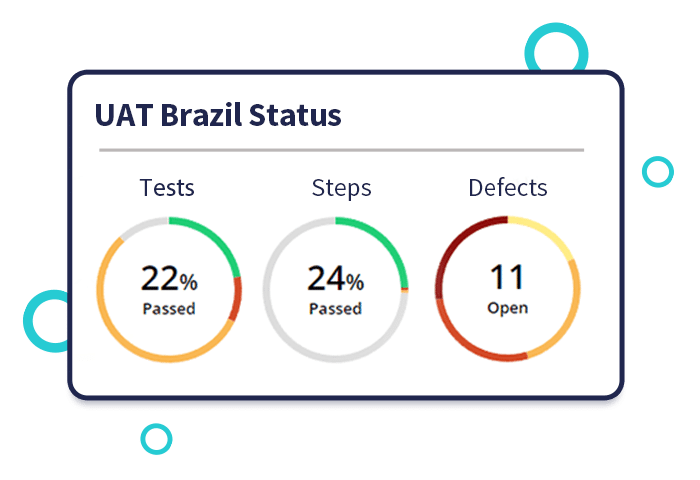
Gain valuable insights with real-time reporting and analytics, enabling data-driven decision-making.
Recognized Leader by






Hear it from our customers

“Amazing tool… Being the benchmark solution for automation of both functional and technical testing.”
Oliver Rademaker
Business Systems Analyst
Discover how ABB, a global leader in engineering, is mitigating its business challenges and successfully completing large-scale testing projects using Panaya's smart testing solutions.

“We saw a quick win in rollout, utilizing Panaya’s comprehensive support for the cutover process, and increased quality in our global SAP solution delivery.”
Yang Gautheron
IT Project ManagerSimplify To Accelerate
Do the smart thing: Discover working tips and advice to make remote User Acceptance Testing easy, effective and fast!
This eBook outlines the top 3 counterproductive UAT practices, and how you can simplify them to gain user adoption and safely execute UAT cycles faster.
Simplify To Accelerate
Our Latest Resources
Go On – Test Us!
User Acceptance Testing (UAT) is the final validation phase in the software lifecycle where actual business users verify that the system supports real-world day-to-day processes. Unlike technical system testing, UAT focuses on validating end-to-end workflows to ensure the solution meets business requirements and is ready for go-live.
UAT is essential for mitigating risk because it validates that complex enterprise applications align with unique business needs and regulatory standards before launch. It uncovers hidden functional issues and usability gaps that technical testing might miss, ensuring higher user adoption and satisfaction. Additionally, successful UAT provides the necessary compliance sign-off to prove that the system is audit-ready and secure.
Common UAT challenges include low user engagement, decentralized communication (e.g., emails/spreadsheets), and poor visibility into defect status. Panaya addresses these by providing a user-friendly, browser-based interface that requires no installation, making it easy for non-technical users to participate. The platform centralizes all communication and documentation, giving managers real-time insights that eliminate bottlenecks and ensure projects stay on track.
Yes, Panaya is designed to scale and is trusted by global enterprise leaders like ABB and JCDecaux to manage complex, cross-application testing landscapes. The platform supports large-scale projects involving ERPs like SAP, Oracle, and Salesforce, offering real-time analytics and dashboards to monitor progress across widespread global teams. Its cloud-native architecture ensures stability and performance even when coordinating hundreds of remote business users simultaneously.
Panaya fosters seamless collaboration between IT and business teams through a centralized cloud-based platform that offers real-time visibility into testing progress. Features like built-in communication tools and automated notifications streamline handoffs, ensuring testers know exactly when to begin their tasks. The unique "pass-the-baton" mechanism enables efficient workflows across different departments, preventing bottlenecks and keeping all stakeholders aligned throughout the project.
Panaya accelerates UAT by automating time-consuming manual tasks, such as test documentation and evidence collection, through its codeless Smart Recorder. This tool captures every click and keystroke automatically, removing the need for users to manually create Word documents or take screenshots. Consequently, Panaya customers report up to a 50% reduction in UAT cycle times, allowing organizations to deploy changes faster without compromising quality.
Panaya streamlines defect management by automatically linking defects to specific test steps and providing system-wide alerts to prevent duplicate reporting. The platform’s smart algorithms detect the potential influence of defects on other tests, enabling managers to proactively block futile test runs. This automated workflow ensures faster resolution times and maintains a clean, organized defect backlog, significantly improving overall testing efficiency.